Updated on: June 16, 2026
Reading Time: 14 minutes
Post Views: 1,461
Quick Overview of Website Design Cost (2026)
Website design costs range from $500 for basic template sites to $50,000+ for custom enterprise platforms. Most small businesses spend between $3,000 and $12,000. The final cost depends on design complexity, features, platform, and who you hire.
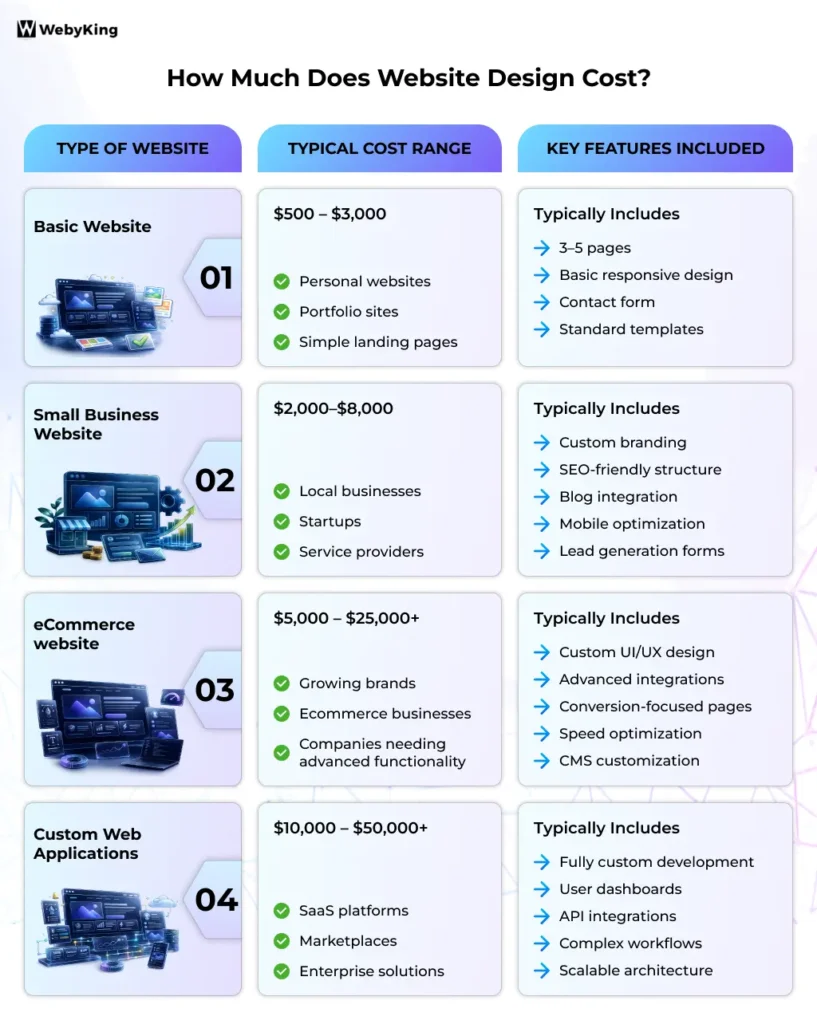
Here’s a quick overview of typical website design costs in 2026 based on common project types and business spending patterns:
- Basic website (3–5 pages): $500 – $1,500
- Small business website: $2,000–$8,000
- eCommerce website: $5,000 – $25,000+
- Custom web applications: $10,000 – $50,000+
In practice, most small to mid-sized businesses tend to invest between $3,000 and $12,000, depending on their goals, required features, and long-term scalability needs.
Most businesses don’t overpay for a website because prices are high — they overpay because they don’t fully understand what they actually need.
If you’ve ever wondered why one provider quotes $1,000 while another quotes $15,000 for what seems like a similar website, the difference usually comes down to design quality, functionality, scalability, and long-term performance.
A low-cost website that fails to generate leads or conversions can cost more over time than investing in a well-designed site from the start.
According to Stanford Web Credibility Research, 75% of users judge a business’s credibility based on its website design, making it one of the most important investments for any business.
Website Design Cost by Service Provider
Different approaches to building a website come with different cost expectations:
| Approach | Cost Range | Best For |
| DIY Builders | $0 – $500 | Personal or very small websites |
| Freelancers | $500 – $5,000 | Small business websites |
| Agencies | $3,000 – $25,000 | Professional and scalable sites |
| Custom Dev | $10,000+ | Complex or enterprise platforms |
Web Design Pricing: What You're Actually Paying For
When a freelancer quotes $1,500 and an agency quotes $8,000 for “the same website,” here’s what’s usually different: strategy, SEO structure, revision rounds, post-launch support, and scalability. The number alone tells you nothing. A detailed scope of work tells you everything.
Web design services pricing typically covers discovery, wireframing, design, development, testing, and launch — though what’s included varies significantly by provider.
Why Do Website Design Prices Vary So Much?
Many business owners wonder why one provider quotes $1,000 while another quotes $15,000 for what appears to be the same website.
Two websites may look similar on the surface, but the work involved behind the scenes can be very different. A lower-priced quote may include only basic design and development, while a higher-priced proposal may cover strategy, custom UX, SEO planning, mobile optimization, integrations, testing, content migration, and post-launch support.
Website pricing often varies because of:
- Custom design vs template-based design
- Basic functionality vs advanced features
- SEO-ready structure vs standard setup
- Limited revisions vs ongoing support
- Basic development vs performance optimization
- Short-term requirements vs long-term scalability
Agency quotes can also vary significantly based on the expertise and services included. Some providers focus only on design and development, while others include strategy workshops, project management, quality assurance testing, SEO consultation, training, and ongoing support.
When comparing website quotes, focus on the scope of work and deliverables rather than price alone. Two proposals may look similar on paper but include very different levels of expertise, functionality, and long-term value.
Website Design Cost Breakdown: What Each Budget Gets You
Website pricing is often determined by the level of functionality, customization, and development effort required. While two businesses may operate in the same industry, their website costs can vary widely depending on the complexity of the project.
The pricing ranges below provide a general benchmark based on common website types and functionality requirements in 2026.
Basic Website ($500–$1,500)
Ideal for personal websites, portfolios, landing pages, or very small businesses that need a simple online presence.
Typically includes:
- 3–5 pages
- Template-based design
- Mobile-responsive layout
- Contact form
- Basic content setup
Standard Business Website ($1,500–$5,000)
Designed for small businesses that need a clean, professional website with essential features, mobile responsiveness, and a foundation for future growth.
Typically includes:
- Custom branding and design
- SEO-friendly website structure
- Blog or CMS integration
- Mobile optimization
- Lead generation forms
- Basic third-party integrations
Advanced Business Website ($5,000–$15,000+)
Suitable for growing businesses that require more customization, advanced functionality, and conversion-focused design.
Typically includes:
- Custom UI/UX design
- Advanced integrations
- Conversion-focused landing pages
- Performance optimization
- CMS customization
- Enhanced user experience features
Custom Web Applications ($10,000–$50,000+)
Built for businesses requiring unique functionality, custom workflows, or scalable digital platforms.
Typically includes:
- Fully custom development
- User dashboards and portals
- API integrations
- Complex workflows
- Advanced security requirements
- Scalable architecture
If you’re a small or growing business, the Standard Business Website and Advanced Business Website tiers above are most relevant to your immediate needs.
Note: These are general industry benchmarks. Actual pricing varies based on project requirements, custom functionality, integrations, and the service provider you choose.
eCommerce websites generally require higher investment due to payment integrations, product management, and scalability needs. You can explore a detailed breakdown of eCommerce website costs to understand these requirements better.
Custom Website Design Cost: Is It Worth the Extra Investment?
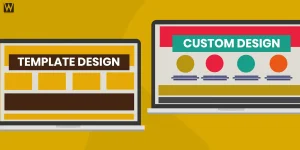
Custom web design typically costs $5,000–$25,000+ depending on complexity. Unlike template-based builds, custom design gives you full control over branding, UX, and functionality.
For businesses with clear lead generation goals and consistent traffic, a well-designed custom website can deliver measurable returns — though results depend on your marketing strategy, traffic volume, and how the site is maintained post-launch.
Website Design Cost by Business Type
Website costs can also vary based on the type of business, growth objectives, and operational requirements. While project complexity affects pricing, businesses in different stages of growth often have different website needs and budgets.
Small Business Website ($2,000–$8,000)
Most small businesses invest within this range for a professionally designed website that supports credibility, lead generation, and local visibility.
Common requirements include:
- Service pages
- Contact and inquiry forms
- Mobile-responsive design
- Basic SEO setup
- Lead generation features
Startup Website ($3,000–$12,000)
Startups often invest more heavily in branding, user experience, and scalability to support growth from the beginning.
Common requirements include:
- Custom branding
- Conversion-focused design
- Investor or product information
- Marketing integrations
- Scalable website architecture
eCommerce Website ($5,000–$25,000+)
eCommerce websites typically require larger budgets due to product management, payment processing, and customer experience requirements.
Common requirements include:
- Product catalog management
- Payment gateway integration
- Inventory management
- Customer accounts
- Conversion optimization
- Third-party integrations
Enterprise Website ($15,000–$50,000+)
Enterprise websites often involve complex technical requirements, higher security standards, and advanced integrations.
Common requirements include:
- Custom workflows
- Enterprise integrations
- Multilingual functionality
- Advanced security measures
- User permissions and roles
- Scalable infrastructure
The right website budget depends not only on the type of business you operate but also on the functionality, customization, and long-term growth goals you need your website to support.
Website Pricing Overview
| Types of Websites | Typical Cost Range | Key Features |
| Landing Page | $100 to $2,500 | Single page, focused on conversions, call-to-action, simple form, minimal design |
| Blog Website | $200 to $2,000 | Homepage + blog layout, About & Contact pages, CMS setup (WordPress), social sharing, basic SEO |
| eCommerce | $1,000 to $50,000 | Product pages, shopping cart, payment integration, mobile UX, and inventory management |
| Corporate | $3,000 to $20,000 | Custom pages, team profiles, service overviews, client testimonials, CRM integration |
What Should You Budget for a Website? (By Business Stage)
Just starting/validating an idea: $500–$2,000. Use a template; keep it simple. Focus on one clear CTA.
Local service business (plumber, lawyer, clinic): $2,000–$6,000. You need a fast, mobile-friendly site with clear contact options, local SEO structure, and trust signals.
Growing business (5–50 employees): $5,000–$12,000. At this stage, your website should generate leads actively, not just sit there. Budget for SEO setup, conversion-focused design, and CMS flexibility.
eCommerce or SaaS: $8,000–$40,000+. Product pages, payment flows, customer accounts, integrations — these add up fast and need proper architecture from day one.
Rule of thumb:
Budget 0.5–1% of your annual revenue for your website. A business doing $500K/year can reasonably invest $5,000–$10,000 in a high-performing site.
What Are the Factors That Affect Website Design Costs?
Website cost depends on several factors beyond visual design alone. The required functionality, integrations, customization level, and development effort all influence the final project cost.
In most projects, custom functionality, eCommerce features, booking systems, third-party integrations, and advanced user experiences have the biggest impact on overall website costs.
Key Factors That Affect Website Cost
| Factor | Impact on Cost |
| Custom Design | High |
| Features & Integrations | Very High |
| Number of Pages | Medium |
| Hosting/Domain | Low |
Additional Features That Increase Website Costs
- Custom Design: +$1,000–$3,000
- CMS Setup (WordPress): +$300–$800
- eCommerce Features: +$2,000–$10,000
- SEO Setup: +$500–$2,000
- Extra Pages (5–10): +$500–$1,00
Search engine optimization is another important factor that can influence long-term website performance. Reviewing typical SEO pricing can help in planning a more realistic budget.
Some platforms are faster and cheaper to launch with, while others offer greater flexibility and scalability.
Website Pricing Across Popular Platforms
Website cost also depends on the platform you choose, as each offers different levels of flexibility, scalability, and customization.
| Platform | Estimated Cost Range | Best For |
| WordPress | $1,000 – $10,000 | Most business websites & blogs |
| Wix / Squarespace | $10 – $80/month + setup | DIY & simple websites |
| Webflow | $2,000 – $15,000 | Design-focused, modern websites |
| Shopify | $2,000 – $40,000+ | eCommerce websites |
| Custom-Coded Website | $5,000 – $50,000+ | Complex & scalable projects |
The platform you choose can also influence development costs, maintenance requirements, scalability, and long-term flexibility.
If you're trying to estimate your website budget, it’s helpful to outline your required features, number of pages, and long-term goals before comparing different pricing options.
Who Should Build Your Website? A Cost Comparison
The cost of building a website depends heavily on who you hire or which approach you take. Here’s how every option compares:
| Option | Cost Range | Pros | Cons | Best For |
| DIY / AI Builders | $0–$50/month | Fast, low cost, no technical skills needed | Limited customization, weak SEO, not scalable | Personal sites, early-stage testing |
| Freelancer | $500–$5,000 | Affordable, flexible | Limited support, inconsistent quality | Small projects, brochure websites |
| Agency | $3,000–$20,000+ | Professional, SEO-ready, scalable | Higher upfront cost | Growing businesses |
| In-House Team | $85,000+/year | Full control, always available | Very expensive, high overhead | Large enterprises |
1. DIY / AI Website Builders
AI website builders like Wix and Squarespace are fast and low-cost but come with limitations — weak SEO, limited customization, and poor scalability. Most businesses eventually outgrow them as their needs increase.
- Typical Cost: $0–$50/month
- Best for: Personal websites, early-stage businesses testing an idea
- Cost Factors: Monthly subscription, premium templates, add-on features
Most AI builders charge $10–$50/month for paid plans. Annual costs typically land between $150–$600/year, including your domain — making it the lowest-cost option upfront, though hidden costs like premium plugins, custom domains, and paid templates can push totals higher than expected.
2. Freelance Website Designer
Freelancers are a budget-friendly option for small businesses and one-time design needs, which keeps costs lower than agencies or in-house teams.
- Typical Cost Range: $500 to $5,000 per project
- Best for: Small businesses, startups, single-page or brochure websites
- Cost Factors: Experience, location, turnaround time, and scope
On average, freelance web design costs range from $15 to $150 per hour depending on experience and location. US-based designers typically charge $50–$150/hour, while designers in Eastern Europe or Asia may charge $15–$40/hour for comparable quality. By experience level: junior freelancers charge $15–$30/hour, mid-level $50–$75/hour, and senior specialists $100+/hour.
3. Professional Web Design Agency
Outsourcing your website design to an agency gives you access to a full team of professionals — including designers, developers, and strategists — all working together to deliver high-quality results.
- Typical Cost Range: $3,000–$20,000+
- Best for: Businesses that want professional results without building an internal team
- Cost Factors: Scope of work, agency reputation, custom design needs, added services like branding or SEO
Agency hourly rates typically range from $75–$200/hour in the US, $40–$100/hour in Eastern Europe, and $20–$50/hour in Asia — though most agencies quote per project rather than per hour.
4. In-House Web Design Team
Hiring an in-house team means your designers work directly with you. It is ideal for businesses with ongoing design needs and large-scale projects.
- Typical Cost Range: $85,000 to $300,000+ annually
- Best for: Enterprises or companies with continuous, high-volume web projects
- Cost Factors: Salaries, employee benefits, tools, equipment, office space
In the US, in-house web designers earn $55,000–$110,000/year on average, with senior designers and developers commanding $120,000+. This excludes benefits, tools, and overhead, which can add 20–30% on top.
What Most Website Cost Guides Don’t Tell You
Many pricing guides focus only on upfront costs, but long-term expenses and performance impact are often overlooked.
For example:
- A cheaper website may require a full redesign within 1–2 years
- Poor SEO structure can limit organic traffic growth
- Low-quality development can increase maintenance costs over time
Businesses that choose the lowest-cost option initially often reinvest 2–3 times more within a few years due to redesigns, performance issues, or scalability limitations.
Understanding total cost of ownership — not just the build cost — is what separates smart website investments from expensive mistakes.
Small Business / Service Website Real Examples
To better understand how website costs translate into real-world outcomes, here are a few typical project scenarios based on common business requirements:
Example 1: Small Business Website (Barking Trails - Pet Care Services)
Barking Trails, a US-based pet care service offering dog walking, pet sitting, and in-home boarding, needed a website that could establish their online presence and streamline bookings. WebyKing built a custom WordPress site with interactive service listings, a seamless booking system, and contact forms — with a project investment in the $3,000–$6,000 range.
After launch, Barking Trails saw a 10x increase in lead generation, 55% growth in monthly organic traffic, 125% increase in new users, and a 78% improvement in conversion rate.
Example 2: Professional Services Website (People Development Australia - Coaching & Training)
People Development Australia, a soft skills consultancy offering leadership coaching and team development programs, needed a structured, content-rich website to showcase their courses and attract new clients. WebyKing built a custom WordPress site with a course catalog, resource library, secure login, and blog integration — typically in the $5,000–$10,000 range for projects of this scope.
Post-launch results included a 117% increase in traffic, 78% growth in new leads and inquiries, 57% improvement in engagement, and a 42% conversion rate improvement.
Example 3: eCommerce Website (Fika Nutrition - Health & Wellness)
Fika Nutrition, a health and wellness brand offering meal plans and diet education, partnered with WebyKing to expand its global digital presence. The project involved custom UI design, responsive development, and performance optimization on WordPress — with projects of this type typically ranging from $8,000–$15,000.
Within 6 months of launch, Fika Nutrition achieved 135% audience growth, a 68% increase in sales, a 45% increase in orders, a 43% growth in repeat orders, and a 97% customer satisfaction rate.
These are real projects WebyKing delivered. Results vary based on industry, traffic volume, and marketing strategy — but they reflect what’s possible when design decisions are aligned with clear business goals.
Working on a similar project? Get a free cost estimate tailored to your requirements.
What Are the Common Ongoing & Hidden Website Costs?
Many businesses underestimate the ongoing and hidden costs of maintaining a website.
Beyond the initial design cost, you should also budget for ongoing and additional expenses:
- Domain name → $10–$20/year
- Hosting → $50–$200/year
- SSL certificate → Free–$100/year
- Maintenance & updates → $50–$200/month
- Content creation (copy, images, videos) → $100–$500 per page
- Premium plugins/themes → $20–$200
- SEO & performance optimization → $200–$1,000+
Additional costs that are often overlooked include:
- Content writing → $100–$500 per page
- Image licensing → $50–$300
- Speed optimization → $100–$500
- Conversion optimization → $200–$1,000
- Future redesign → $1,000–$5,000
These costs vary depending on your website’s size, functionality, and long-term goals. Understanding these ongoing expenses is essential when planning a realistic website budget.
How to Save Money on Web Design Without Losing Quality?
You can reduce website costs without sacrificing quality by focusing on what truly matters.
- Start small (build an MVP website)
Launch with only essential pages like Home, About, and Contact. Add advanced features later once your website starts generating traffic or leads. - Use templates instead of custom design
Premium templates can reduce design time significantly while still delivering a professional look. Custom design should only be used when branding or functionality requires it. - Provide your own content
Supplying your own text, images, or brand assets can save hundreds of dollars in copywriting and media production costs. - Compare quotes from multiple providers
Always get 2–3 quotes with a clear scope of work. This helps you understand market pricing and avoid overpaying for similar services.
If your website budget is limited, prioritize user experience, mobile responsiveness, SEO fundamentals, and lead-generation functionality before investing in advanced features or custom enhancements.
A website isn’t just an expense — it’s a growth tool. The real question isn’t “how much does website design cost?” but “what does it return?”
What Is the ROI of Investing in a High-Quality Website?
A professionally designed website, built by website design experts, is more than an online presence; it directly impacts trust, conversions, visibility, and long-term business growth.
A high-quality website can help businesses:
- Improve trust and credibility
- Increase leads and conversions
- Support long-term SEO growth
- Create a better user experience
- Reduce future redesign costs
The real value of a website should be measured by business results, not just upfront pricing.
Research consistently shows that investing in UX improves conversion rates, reduces bounce rates, and increases customer trust — all of which directly impact revenue. For a site receiving 1,000 visitors/month with an average lead value of $200, that’s an additional $2,000/month in pipeline — from design alone.
Low-cost websites may seem affordable initially, but they often lead to long-term issues, including poor SEO performance, limited scalability, slow loading times, and higher redesign costs.
Businesses lose customers when their websites look outdated, feel difficult to use, or create friction during the buying process.
Businesses that invest in usability, SEO structure, and scalability from the start typically avoid costly rebuilds within the first 2–3 years.
Is Website Design Cost Worth It?
- A $1,000 website that generates $10,000/year = strong ROI
- A cheap website that doesn’t convert = wasted investment
Website cost should be evaluated based on results, not just price.
Quick Comparison of a Cheap Website vs. a Professional Website
A low-cost website may save money upfront, but many businesses later pay far more through redesigns, poor conversions, lost leads, and slow performance.
| Factor | Cheap Website | Professional Website |
| Cost | Low upfront ($300–$800) | Higher upfront ($3,000+) |
| Design Quality | Basic templates | Custom, branded design |
| SEO Performance | Weak | Optimized for search engines |
| Load Speed | Slow (3–6 sec avg) | Fast (<2 sec, optimized) |
| Conversion Rate | Low | High (conversion-focused UX) |
| Scalability | Limited | Built for growth |
| Long-Term Cost | Higher (due to redesigns) | Lower (future-proof) |
Common Mistakes to Avoid When Budgeting for a Website
Many businesses overspend on websites due to poor planning and unclear goals.
- Choosing the cheapest option without checking quality
- Ignoring mobile responsiveness
- Not planning for SEO
- Adding unnecessary features early
- Not defining clear business goals
What Should You Prepare Before Asking for a Website Quote?
Getting accurate website pricing becomes much easier when you clearly define your project requirements upfront. In many projects, unclear expectations lead to inaccurate quotes, scope changes, and unexpected costs later.
Before requesting a quote, prepare:
- Estimated number of pages
- Required features (eCommerce, booking, login, etc.)
- Websites or designs you like
- Your business goals
- Content readiness (text, images, branding)
- SEO or marketing requirements
- Expected timeline and budget
The more clearly you define your needs, the easier it becomes to compare quotes and avoid unnecessary revisions later.
Many businesses also wonder whether a website quote is reasonable. Rather than comparing prices alone, review the scope of work, included features, SEO considerations, revisions, support, and scalability to ensure you’re comparing equivalent deliverables.
When reviewing a quote, watch for these red flags: no itemised scope of work, vague deliverables, no mention of post-launch support, and unusually low pricing with no explanation. A trustworthy quote should clearly list pages, features, revisions, timeline, and what happens after launch.
Website Redesign Cost in 2026
Redesigning an existing website typically costs 60–80% of building a new one. Most small business redesigns fall between $2,000 and $10,000. Enterprise redesigns can exceed $25,000.
Key factors that drive redesign costs up: content migration, rebrand requirements, platform switching (e.g., moving from Wix to WordPress), and adding new functionality that didn’t exist before.
Signs you need a redesign:
- The site loads slowly
- Doesn’t rank in Google
- Has a poor mobile experience
- It isn’t generating leads despite traffic.
Final Thoughts
Understanding website design costs starts with identifying your business goals, required functionality, and long-term growth plans.
The best website investment is not necessarily the cheapest option—it’s the one that delivers measurable business value, supports future growth, and provides a strong user experience.
Before requesting quotes, take time to define your requirements, priorities, and budget. A clear project scope leads to more accurate pricing, better provider comparisons, and stronger long-term results.
Not Sure Which Option Fits Your Budget?
- Simple 5-page site, tight budget → Freelancer ($1,500–$3,000)
- Local business needing leads and SEO → Agency ($3,000–$8,000)
- Growing business, complex needs → Agency or custom ($8,000–$20,000+)
- Large enterprise or SaaS platform → Custom development ($20,000+)
Every website is different. If you’re still unsure what your project should cost, our team can evaluate your requirements and provide a realistic estimate — without unnecessary upsells or hidden costs.
Frequently Asked Questions (FAQs) on Website Design Cost
How much does a website cost in 2026?
Website design costs in 2026 typically range from $500 for basic websites to $50,000+ for advanced custom platforms. The final cost depends on features, complexity, and who you hire.
Why are website prices so different?
Q2. Why are website prices so different?
Is a cheap website worth it?
Cheap websites may work for basic needs, but they often lack scalability, SEO, and performance optimization. Many businesses eventually redesign them as they grow.
Do I need to pay monthly for a website?
Yes. Most websites have ongoing costs such as hosting, domain renewal, maintenance, security updates, and SEO services.
What is included in website design pricing?
Website pricing usually includes design, development, responsive setup, testing, and launch support. Some projects may also include SEO, content creation, or maintenance.
How long does it take to design a website?
A simple website may take 2–4 weeks, while larger or more complex websites can take several months, depending on features and revisions.
Should I hire a freelancer or a web design agency?
Freelancers are usually more affordable for smaller projects, while agencies are better suited for complex websites that require strategy, design, development, and ongoing support.
Can I build a website myself to save money?
Yes. DIY platforms like Wix or Squarespace can work for simple websites, but businesses often hire professionals for better customization, SEO, and scalability.
What hidden costs should I plan for when building a website?
Common hidden costs include premium plugins, content writing, SEO setup, maintenance, hosting, and future redesigns or feature upgrades.
Which features increase website design costs the most?
Custom functionality, eCommerce systems, booking features, dashboards, advanced animations, and third-party integrations usually increase website costs the most.
How much should a small business spend on a website?
Most small business websites typically cost between $2,000 and $8,000, depending on functionality, design requirements, SEO needs, and customization. Businesses focused on long-term growth often invest more in professional design, scalability, and conversion optimization.
Is a custom website worth the extra cost?
Custom websites often provide better branding, scalability, SEO flexibility, and user experience. For businesses focused on growth, the additional investment can deliver stronger long-term value.
How much should I budget for a professional website?
Most businesses budget between $3,000 and $10,000 for a professional website, although costs vary based on complexity, design requirements, and business goals.
How much does a website cost, including design, hosting, and maintenance?
A business website may cost anywhere from $1,000 to $20,000+ initially, with ongoing expenses for hosting, maintenance, security, and SEO typically ranging from a few hundred to several thousand dollars annually.
How much does a landing page design cost?
A standalone landing page typically costs $100–$1,000 for template-based builds and $1,500–$2,500+ for custom-designed, conversion-optimized pages. The main cost drivers are copywriting, A/B testing setup, and CTA design.
How much does a website redesign cost?
Website redesign costs typically range from $2,000 to $15,000 for small to mid-sized businesses. The final cost depends on whether you’re switching platforms, adding new features, or simply refreshing the design. Plan for 60–80% of what a new build would cost.
What is the average cost of a custom website?
Custom websites typically cost between $5,000 and $25,000 for business websites and $10,000–$50,000+ for complex platforms. The main cost drivers are custom UX design, unique functionality, third-party integrations, and the development team’s experience level.
Ravi Makhija, the visionary Founder and CEO of WebyKing, is a seasoned digital marketing strategist and web technology expert with over a decade of experience. Under his leadership, WebyKing has evolved into a premier full service web and marketing agency, delivering innovative solutions that drive online success. Ravi’s deep understanding of the digital landscape combined with his passion for cutting-edge technologies empowers him to consistently exceed client expectations and deliver results that matter.